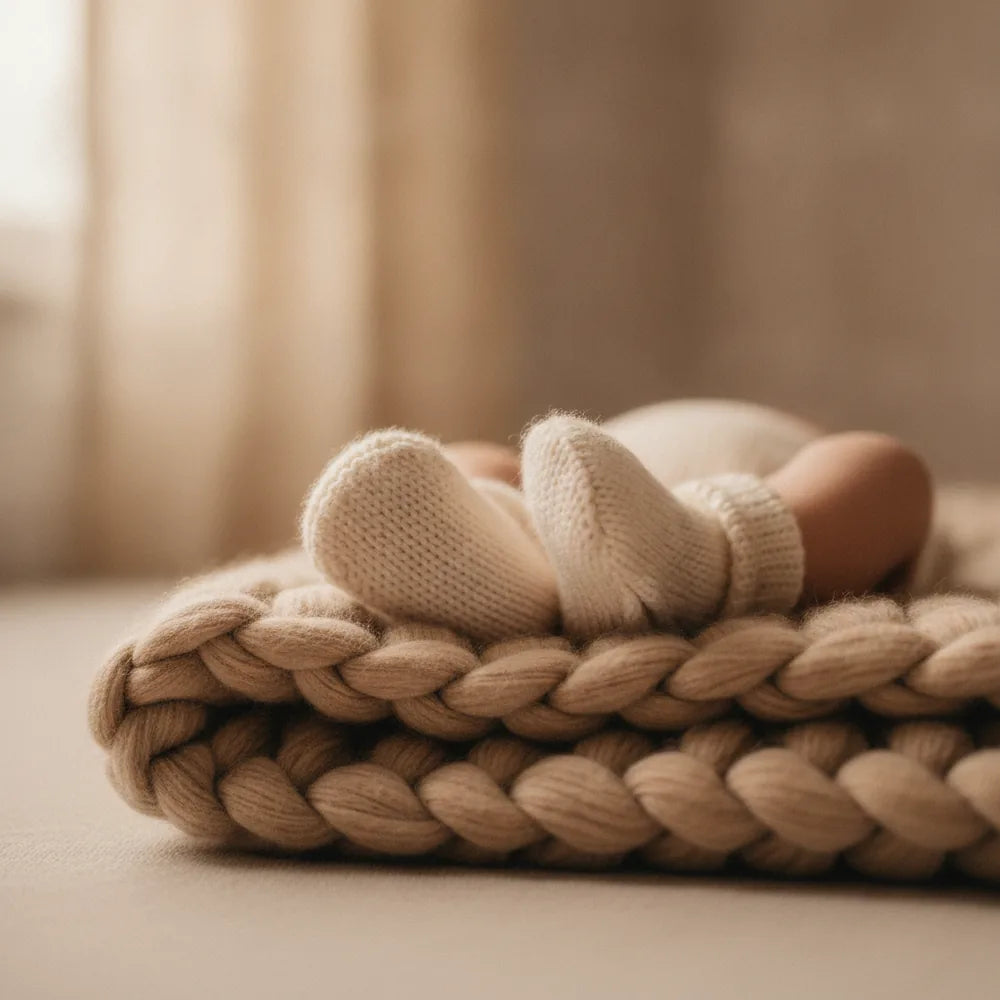
Yes, wash new baby clothes before the first wear. A gentle prewash removes manufacturing residue, sizing finishes, and dust picked up during shipping and storage, and it softens stiff new fabric. Use a fragrance-free detergent on a gentle cycle, wash new darks separately, and follow each garment’s care label.
Key takeaways
- Prewashing new baby clothes before the first wear is the common recommendation, mainly to remove production residue, sizing, and dust and to soften fabric.
- Wash the items that touch skin most first: bodysuits, sleepers, hats, mittens, socks, and bibs.
- Use a fragrance-free, dye-free detergent, a gentle cycle, and an extra rinse; skip fabric softener on the first wash.
- Wash brand-new colored items separately for the first few washes so dye does not transfer.
- Do not wash anything you might return; confirm the size first, then wash only what you will keep.
- Any skin-health question, such as sensitive skin or irritation, goes to the American Academy of Pediatrics and your pediatrician, not to us.
Should you wash new baby clothes before your baby wears them?
Yes — washing new baby clothes before the first wear is the common recommendation, and it takes one short cycle. New garments carry leftovers from how they are made and moved: manufacturing residue, sizing and finishing agents (the light starches that make fabric look crisp on the shelf), plus dust and handling from the factory-to-store journey. A wash clears most of that and softens fabric that can feel stiff straight out of the packaging. For a full routine beyond the first wash, see our baby clothes care guide, and if you are still building the wardrobe, browse new baby clothing.
What a prewash does not do is turn laundry into medical care. Whether a prewash matters for sensitive skin, irritation, or any skin condition is a health question, not a logistics one.
This article covers laundry logistics, not medical advice. For anything about skin sensitivity, irritation, allergies, or eczema, follow guidance from the American Academy of Pediatrics (AAP) at HealthyChildren.org and talk to your pediatrician. See our medical disclaimer.
What is on new baby clothes before you wash them?
New clothes commonly carry three things: finishing residue from production, sizing agents (light starches or coatings that keep fabric smooth and wrinkle-free in the store), and dust and handling from packing, shipping, and shelf time. None of this is unusual for any new textile — it is simply why a first wash leaves the fabric cleaner, softer, and less stiff. Prewashing also gives you a moment to spot loose threads, stray tags, or pins before they reach your baby.
How do you prewash newborn clothes step by step?
Prewashing is a short, gentle version of a normal wash. Here is a simple routine that works for most cotton baby basics:
- Read each care label first for the fabric, water temperature, and drying method, because those instructions override any general advice.
- Remove tags, stickers, and pins, and close any snaps and zippers so they do not snag.
- Sort by color. Wash brand-new darks and brights separately for the first few washes so dye does not transfer to lighter pieces.
- Use a fragrance-free, dye-free detergent (often labeled “free and clear”), measured to the low line so it rinses out cleanly.
- Choose a gentle or delicate cycle with cool or warm water, matching what the label allows.
- Add a second rinse to clear detergent from the fibers.
- Dry per the label — air-dry or tumble on low, and skip fabric softener and dryer sheets on the first wash so you are not adding new coatings onto freshly cleaned fabric.
- Wash again before use if the clothes then sit in storage for several months.
What should you wash first, and what can wait?
Start with the items that sit directly against your baby’s skin, and leave outer layers and structured items for later. This table is a quick triage for a brand-new wardrobe:
| Item | Wash before first wear? | Why |
|---|---|---|
| Bodysuits, onesies, footed sleepers | Wash first | Against the skin all day; the highest-contact layer |
| Hats, mittens, socks | Wash first | Touch delicate skin on the head, hands, and feet |
| Bibs and burp cloths | Wash first | Sit against the face and mouth |
| Cardigans, jackets, snowsuits | Usually can wait | Worn over other clothing, with less direct skin contact |
| Pre-walker shoes and booties | Spot-clean; do not machine wash | Machine washing can damage the structure; follow the care label |
| Flame-resistant sleepwear | Follow the care label exactly | How you wash it can affect a certified garment, so see the CPSC note below and the care label |
One money-saving tip: do not prewash anything you might return or exchange, because most stores cannot accept washed clothing. If you are unsure of the size, check our baby clothes size finder first, then wash only the pieces you plan to keep.
What detergent should you use for new baby clothes?
A fragrance-free, dye-free detergent — often sold as “free and clear” — is the practical default, because it rinses cleanly and adds no perfume or dye to the fabric. Use the smallest recommended dose and add an extra rinse. Whether a particular detergent matters for sensitive skin is a health question; for that, follow the American Academy of Pediatrics (AAP) and your pediatrician rather than a product promise.
Do you need to wash new baby clothes separately from the family laundry?
Not for cleanliness — a fragrance-free load washes the same whether it is baby-only or mixed. The one practical reason to separate is color: brand-new reds, deep blues, and other saturated dyes can bleed in the first few washes, so keep them away from whites and pastels until the dye sets. Many parents also run a separate fragrance-free load simply so the baby’s clothes are not picking up scented detergents and softeners used elsewhere in the house.
How should you wash flame-resistant baby sleepwear?
Follow the garment’s care label exactly, and do not change how you wash it. In the US, children’s sleepwear is regulated by the Consumer Product Safety Commission (CPSC) under 16 CFR 1615 and 1616; if a garment is labeled flame-resistant, its care label reflects those requirements, so wash it only as directed and do not treat it in any way the label does not list. For what those standards mean, see the CPSC.
Sources: American Academy of Pediatrics — HealthyChildren.org; U.S. Consumer Product Safety Commission — children’s sleepwear flammability, 16 CFR 1615 and 1616, cpsc.gov. This article is general laundry guidance, not medical advice; see our medical disclaimer.